
Time and Attendance Software: Why UK Businesses Are Finally Ditching the Spreadsheet
There's a moment many business owners and HR managers can relate to. It's the end of the month, payroll needs to go out by Friday, and someone is sitting at a desk manually cross-referencing timesheets against a spreadsheet, chasing three people who haven't submitted their hours, and trying to remember whether last Tuesday was a bank holiday. The data is almost right. Probably right. Close enough, maybe.

That "close enough" approach to workforce tracking is costing UK businesses more than most realise in payroll errors, in admin hours, in labour costs that were never properly monitored, and in compliance risks that quietly accumulate in the background.
Time and attendance software exists to replace all of that with something accurate, automated, and genuinely easy to use. Here's what it actually looks like in practice.
What Time and Attendance Software Does and Why It Matters
At its core, time and attendance software automatically records when employees start and finish work, processes that data in real time, and feeds it through to payroll and HR reporting without anyone having to manually touch it. But that description undersells the difference it makes in practice.
The comparison between manual tracking and a properly automated system is stark: where spreadsheets are susceptible to human error, digital systems deliver 99.9% precision. Where paper timesheets provide delayed, historical data at best, automated software gives managers instant, real-time updates. Where manual systems require someone to re-enter data into payroll, integrated software processes it automatically.
That's not a marginal improvement it's a fundamentally different way of operating. And for any business that's been piecing things together with spreadsheets and goodwill, the shift is immediately noticeable.
How It Works in Practice
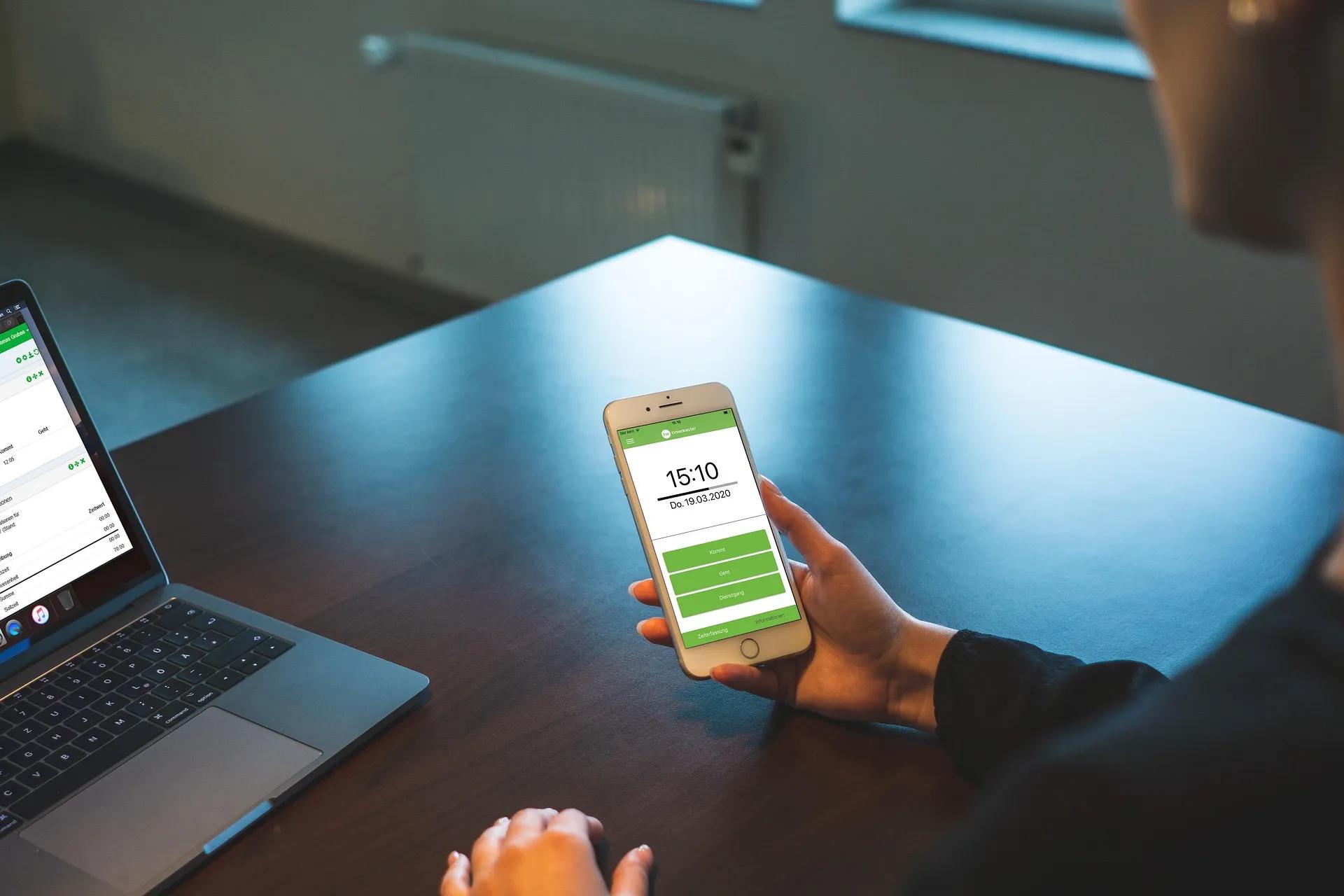
The experience for employees is simple to the point of being invisible. They clock in using whichever method suits their role a biometric terminal, a mobile app with GPS, or a desktop clocking tool for office-based staff. The system captures the transaction instantly and records it in the cloud.
From that moment, the data is live. Managers can see who is in, who is running late, and who hasn't shown up — across every site and department, from a single dashboard. There's no waiting until the end of the day for someone to email over a timesheet. There's no end-of-month reconciliation exercise. The information is simply there, accurate and up to date, whenever it's needed.
When employees need to manage their own records checking holiday balances, submitting leave requests, reviewing their timesheets they can do so directly through a self-service portal, without needing to contact HR at all. For HR teams fielding repeat queries about remaining leave days or hours worked, that single feature alone tends to free up a meaningful amount of time every week.
The Payroll Connection That Changes Everything
Ask any payroll manager what their biggest pain point is and the answer is almost always the same: getting accurate, complete data from multiple sources, reconciled and ready to process, before the deadline hits. It's a monthly pressure that manual systems make significantly worse than it needs to be.
Computime's time and attendance software integrates directly with Sage Payroll in a full two-way connection, and exports approved hours for Pegasus and QuickBooks meaning that once a manager has reviewed and signed off the period's data, it flows straight through to payroll without anyone re-entering a single figure.
The downstream effects are significant: fewer payroll errors, faster processing, cleaner audit trails, and a much lower risk of the kind of underpayment or overpayment disputes that damage employee trust and take time to resolve.
Built for Real Businesses, Not Just Enterprise
One of the things that sets Computime's platform apart is how genuinely adaptable it is across different types of organisations. The software is used by businesses across construction, logistics, manufacturing, retail, hospitality, healthcare, and education industries with very different workforce structures, shift patterns, and compliance requirements.
For construction and field services, GPS tracking verifies attendance across multiple sites and reduces time theft. For manufacturing and warehousing, complex shift patterns and overtime rules are managed automatically. For offices and hybrid teams, remote working is monitored with the same visibility as on-site staff. The system doesn't force businesses to work differently it adapts to how they already operate.
Computime's software is scalable from 20 to 5,000 employees, which means it's equally at home in a growing SME as it is in a larger multi-site organisation. And critically, it remains affordable at every stage of that journey.
The Return on Investment Is Measurable
This is where the conversation tends to shift from "sounds useful" to "we should have done this sooner." The efficiency gains from properly automated time and attendance software aren't vague or theoretical they show up in real numbers.
Businesses using the platform typically see up to an 80% reduction in administrative work through automated timesheets and payroll processing, a 5 to 10% reduction in labour costs through better visibility of overtime and staffing levels, and the complete elimination of payroll errors and time theft through biometric and GPS verification.
At £3 per employee per month with no setup fees, no long-term contracts, and a free trial available — the investment is modest relative to those returns. Most businesses find the system pays for itself within the first few months, often sooner.
30 Years of UK Expertise Behind It
Computime has been providing time and attendance solutions to UK businesses for over 30 years, supporting more than 800 businesses from a Leeds-based team. Every customer gets a dedicated project manager, professional installation, and comprehensive training and when support is needed, it's handled by someone in Leeds who knows the system, not an overseas call centre.

That kind of continuity and genuine local support matters, particularly during implementation when businesses are transitioning from manual processes for the first time.
Time to Stop Settling for "Close Enough"
Managing a workforce on spreadsheets and paper timesheets isn't just inefficient it's a choice to accept inaccuracy as a baseline. Every month, that choice costs time, money, and the clarity that good decision-making requires.
Time and attendance systems replaces guesswork with data, and manual effort with automation. It gives managers real visibility, gives employees the transparency they deserve, and gives HR and payroll teams the accurate records they need to do their jobs properly.
The technology is straightforward, the price point is accessible, and the difference is immediate.